Post-Harvest & Value Addition

Secondary Processing Unit
Post-Harvest Technologies for Horticultural Crops

Practical solutions to reduce post-harvest losses, improve shelf life, and create value-added products from fruits, vegetables, flowers and plantation crops.
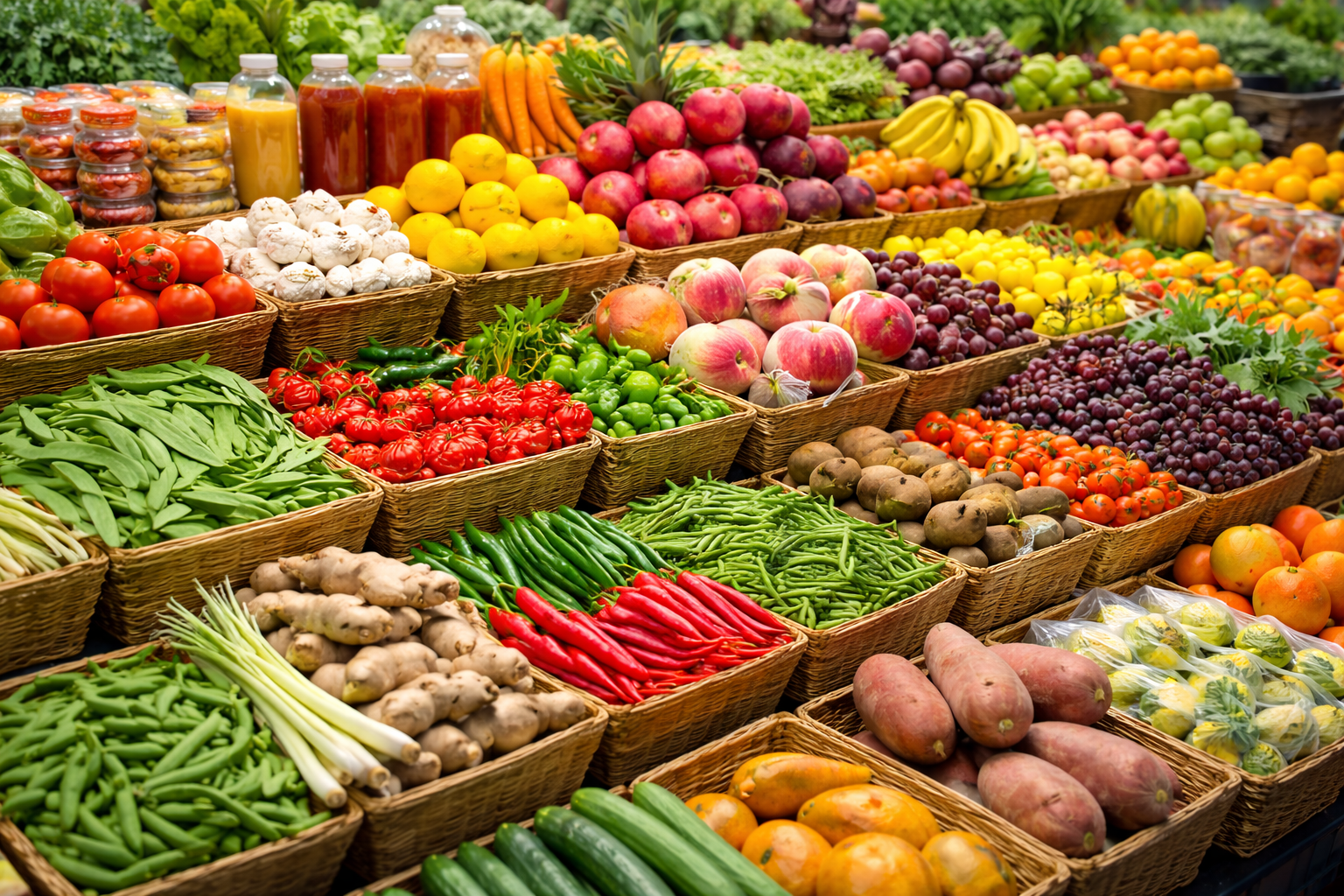
Secondary Processing Unit - Post-Harvest & Value Addition

Overview

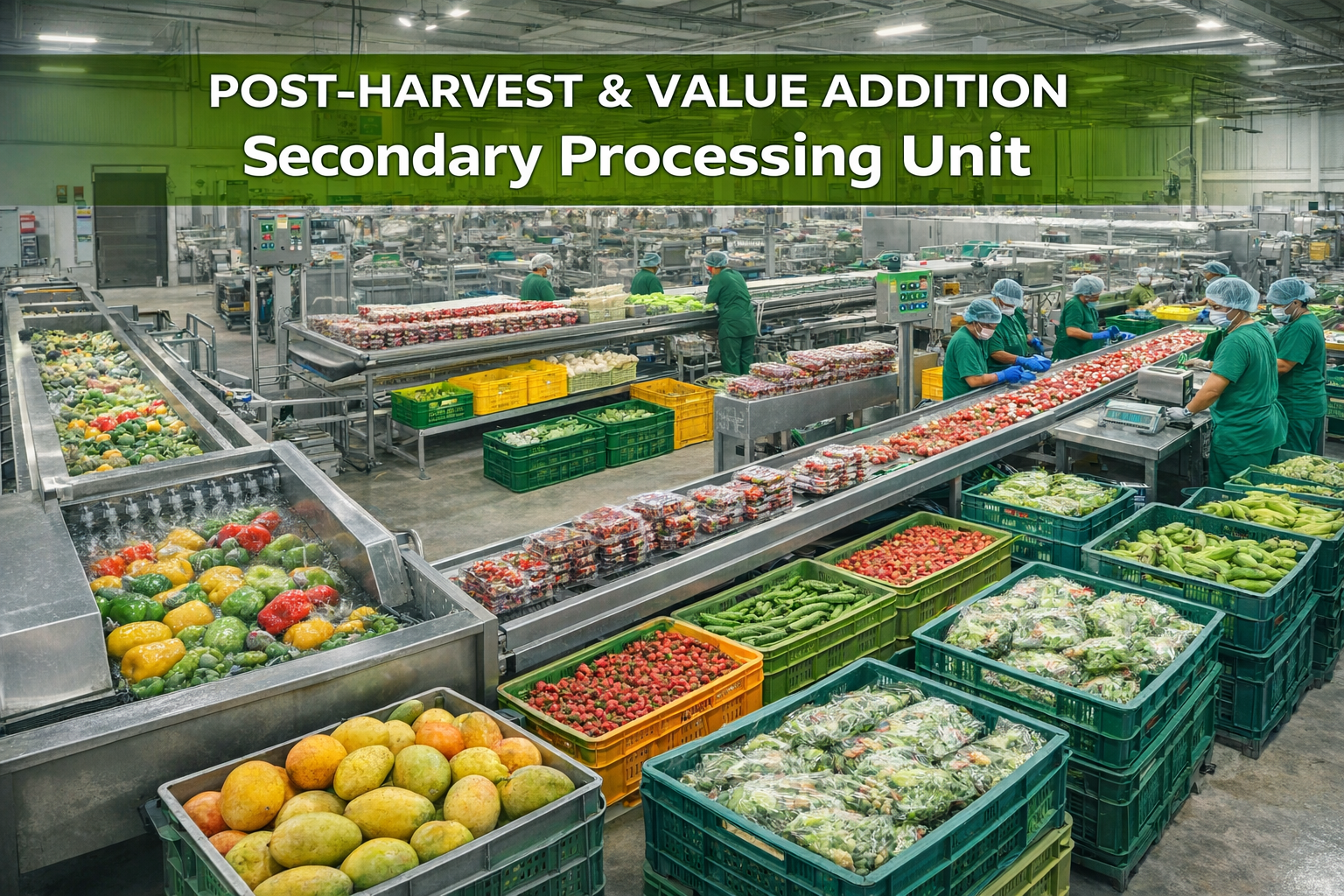
A secondary processing unit focuses on post-harvest handling and value addition—helping farmers, FPOs and agribusinesses convert raw produce into stable, market-ready products with improved shelf life.

The reference material is an overview of Post-Harvest Technologies in Horticulture and Value Addition of Horticultural Crops.

Post-Harvest overview

Importance of Post-Harvest Technologies (PHT)

  • Fresh fruits and vegetables are a key part of the human diet.
  • Fruits & vegetables are rich in vitamins and minerals, known as protective foods.
  • They contribute to human well-being due to nutritive value, availability, and affordability.
  • Dietary recommendation highlighted: 120 g fruits and 280 g vegetables per capita per day.
Why this matters

Post-harvest systems protect quality and reduce losses so that more of the produced crop actually reaches the consumer in good condition—and supports year-round availability.

Post-Harvest Technology: Sub-Disciplines

The material groups PHT into the following core disciplines.

Packaging

Selection of suitable packs and protective packaging to reduce damage and quality loss.

Storage

Storage methods that extend shelf life and manage ripening and distribution.

Post-Harvest Physiology

Understanding crop behaviour after harvest to plan handling and storage.

Processing

Conversion to stable products (juices, dehydrated products, pastes, etc.).

Quality Assurance

Standardisation and quality checks for consistent market-ready output.

Food Safety

Hygiene, sanitation and safe practices to reduce contamination.

Fermentation

Fermented products and preservation pathways where relevant.

Waste Management

Utilisation/recycling of by-products and processing waste.

What “Post-Harvest” covers

Post-harvest includes the actions after harvest that prepare produce for final consumption.

  • Pre-cooling
  • Chemical treatments
  • Curing
  • Storage, ripening and distribution
  • Waxing
  • Trimming / sorting
  • Transportation
  • Cleaning / washing
  • Packaging
  • Grading

PHT: Importance & Role

  • Post-harvest loss reduction
  • Value addition
  • Contribution to the economy
  • Availability of fruits & vegetables during off-seasons
  • Tools for export earnings
  • Employment generation
  • Adding variety in taste and nutrition
  • Waste utilisation
  • Home-scale preservation
What Jivika can implement

Unit planning, process flow, equipment selection, hygiene workflow, packaging and storage strategy—aligned to your crop mix, seasonality, and capacity.

Value Addition Options (Crop-wise)

Crop examples and products referenced in the material.

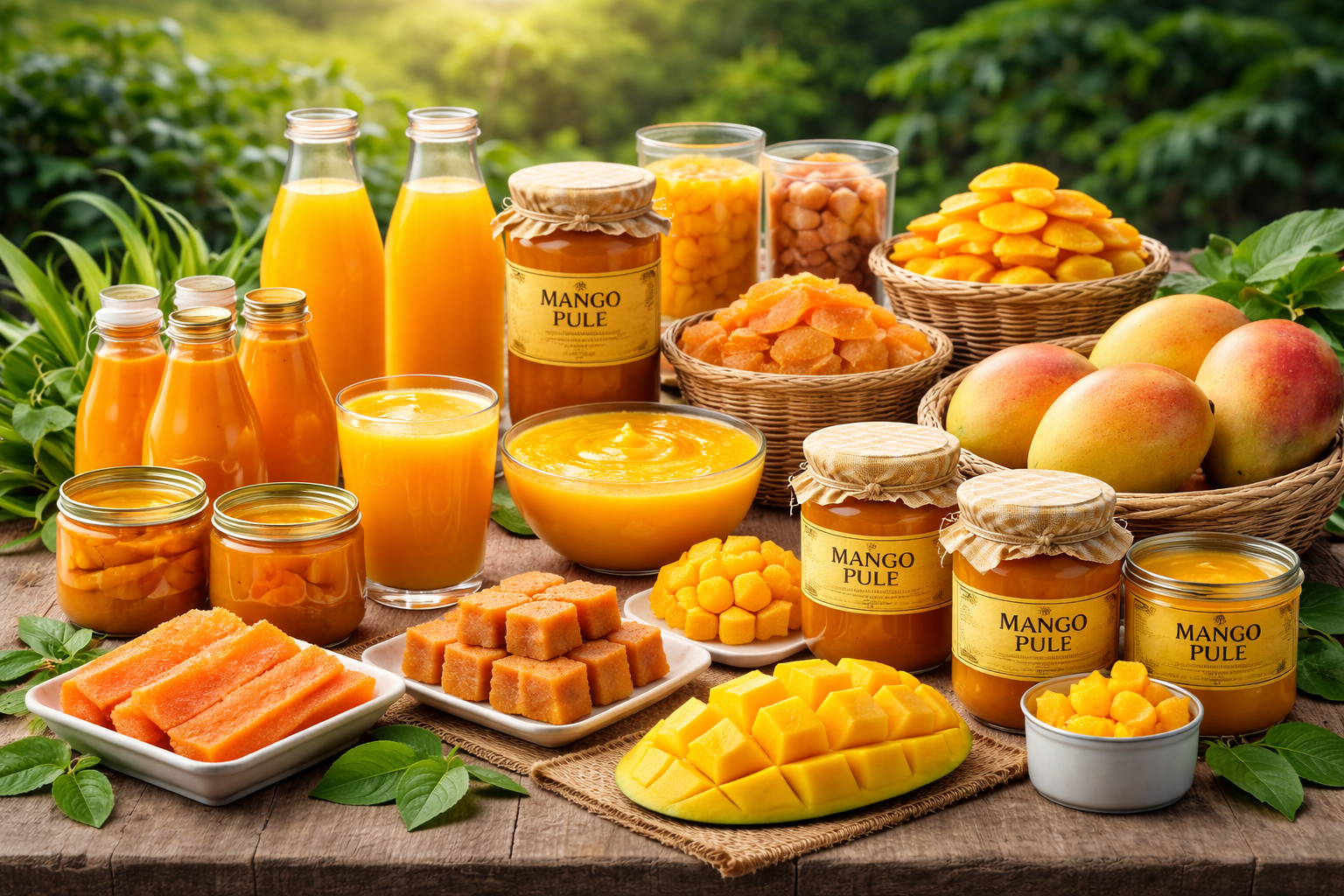
Mango value addition

Mango – Value Addition

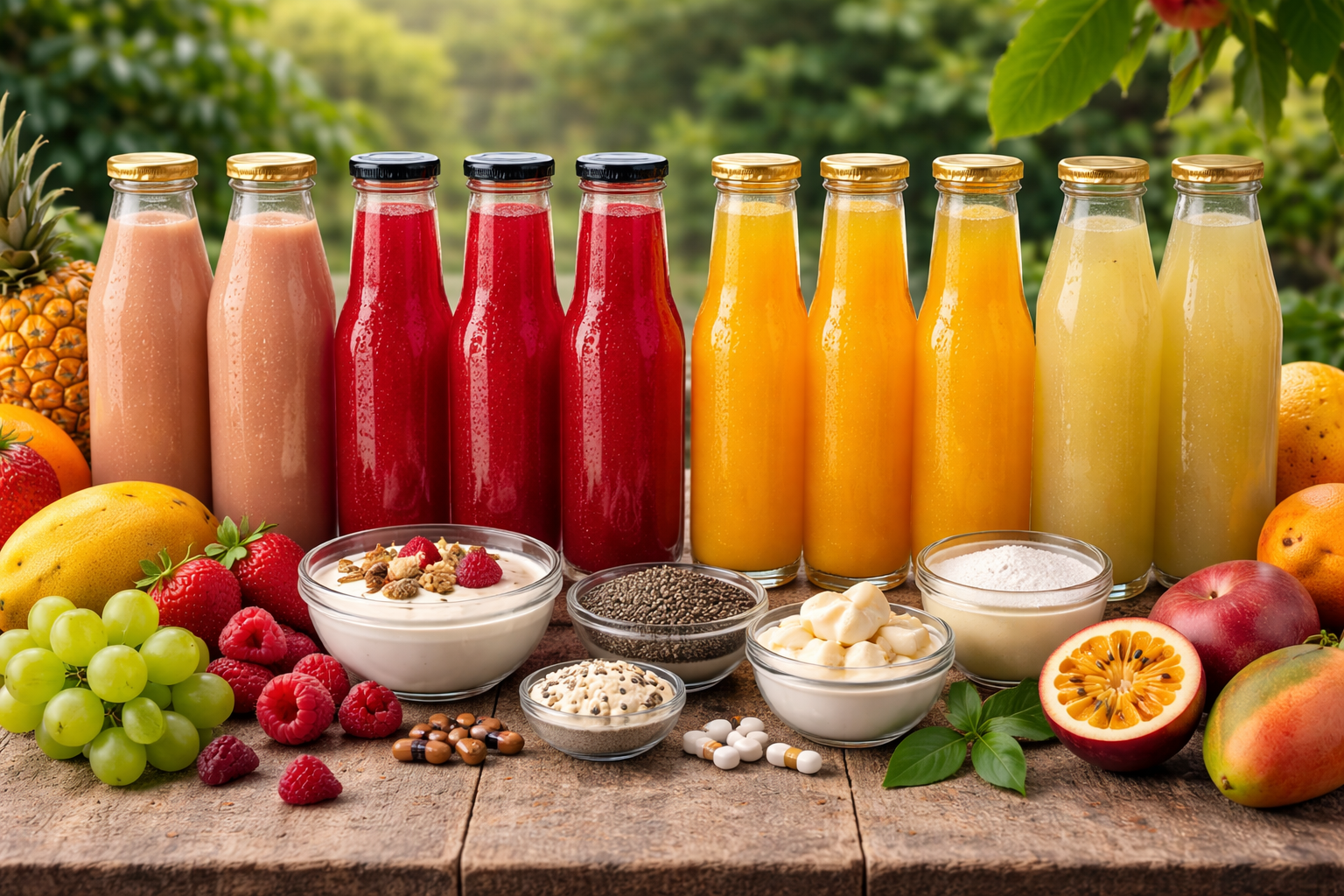
The reference highlights treatment units and products including: RTS beverages, pulp, osmo-dried slices, fruit bar, dehydrated slices, beverage concentrate, canned slices, canned pulp, and jam.

Hot Water Treatment Unit
  • Semi-automated system
  • ~500 kg capacity
  • Controls fruit fly & anthracnose infections
Arka Probiotic Mango Juice
  • Contains added water & sugars (no preservatives)
  • Rich in free phenolic acids, carotenoids; added vitamins via probiotic action
  • Shelf life: > 4 months under refrigerated conditions

Pomegranate value addition

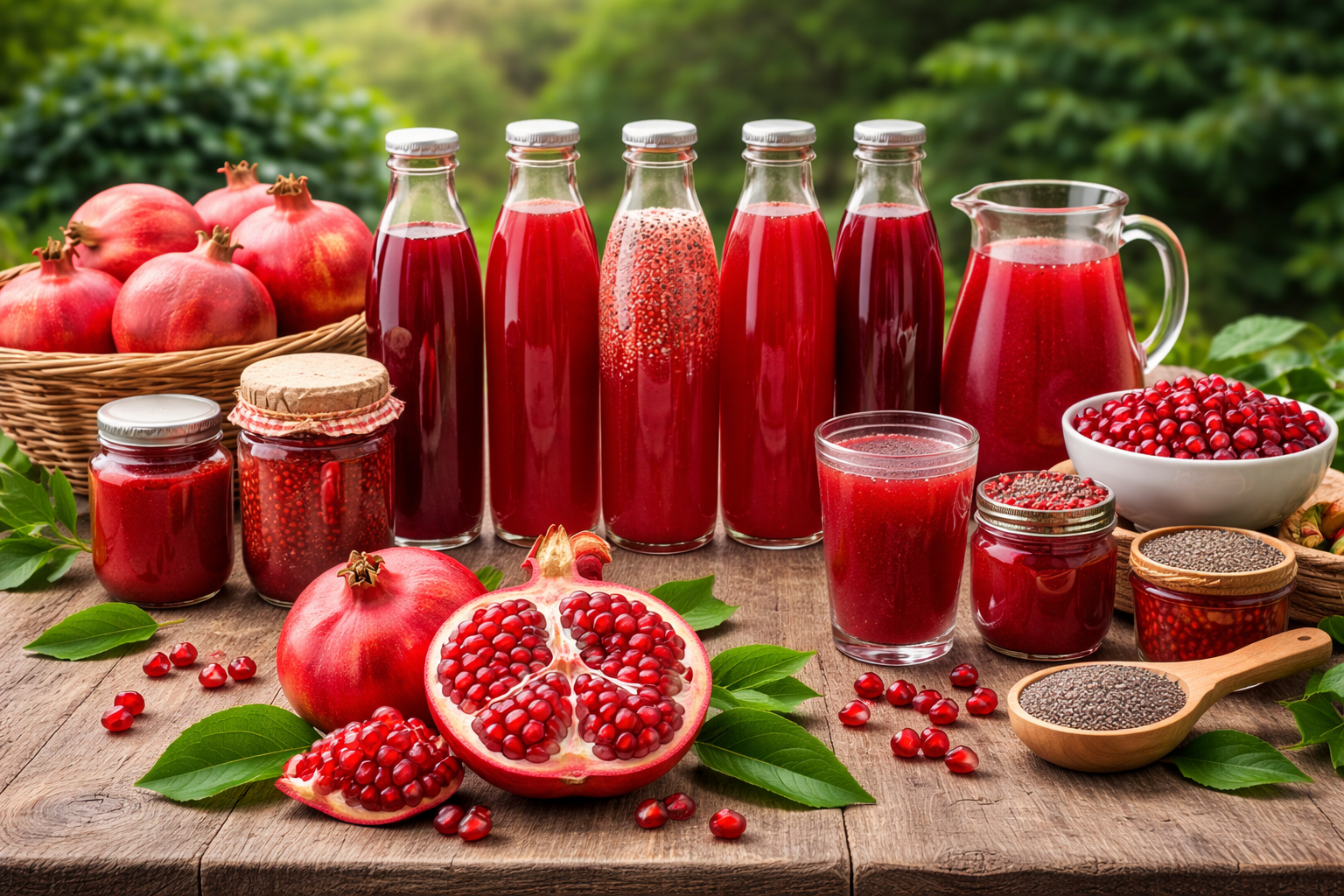
Pomegranate – Value Addition

Syrup / RTS with Chia Seeds
  • Pomegranate syrup incorporated with 15% chia seeds
  • Reported higher level of antioxidant and phenol content
Nutri-enriched RTS Blends
  • 90% pomegranate juice + 10% drumstick leaf extract RTS
  • 68.5% pomegranate + 30% drumstick leaf extract + 1.5% ginger juice (squash)
  • Blend noted for higher nutrient content

Grapes value addition
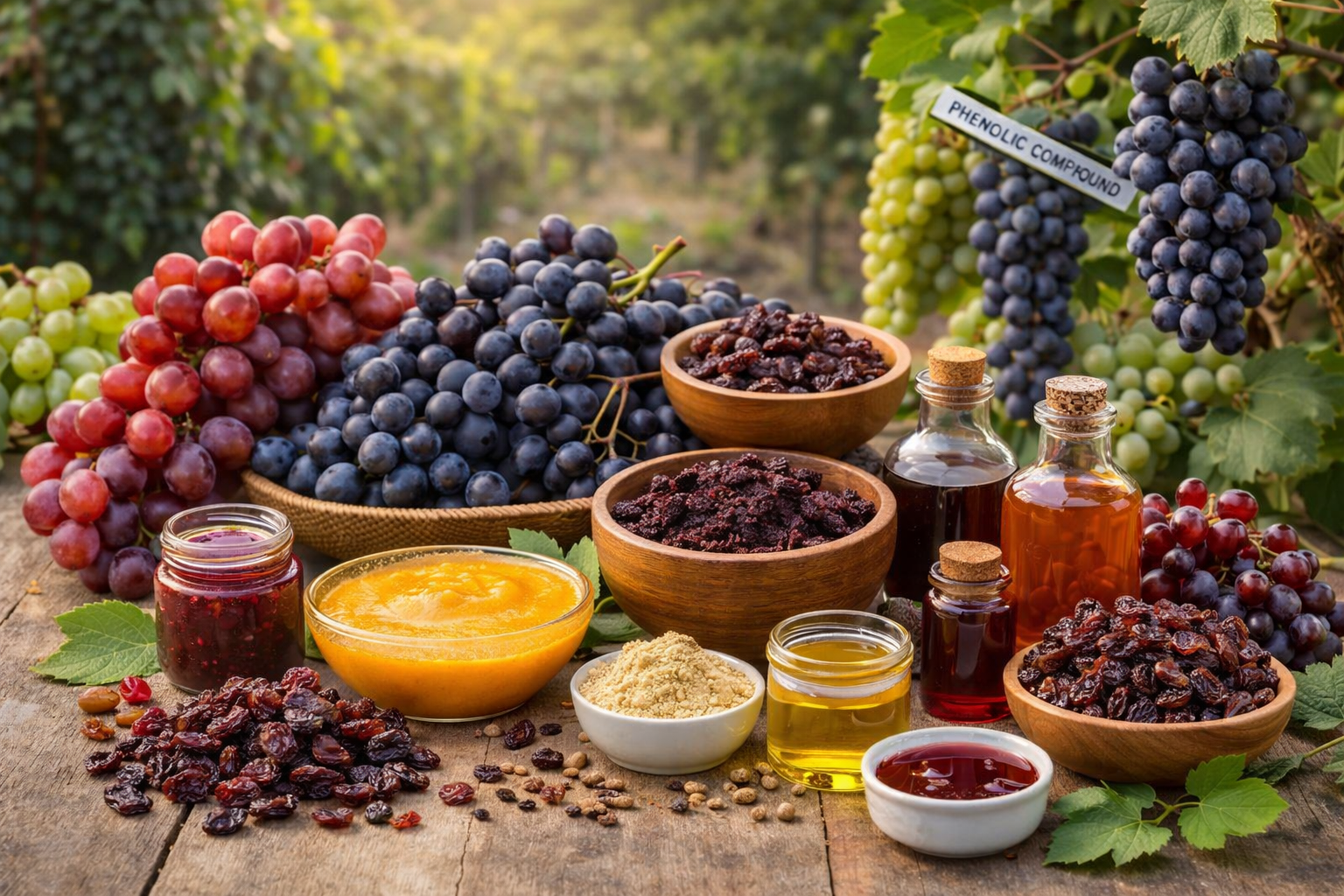
Grapes – Value Addition
  • Raisins and other processed forms
  • Reference compares grapes vs raisins (per 100g): 70 calories & 15g sugar vs 300 calories & 60g sugar
  • By-product pathway shown via grape pomace extraction (value recovery from residues)
Banana value addition
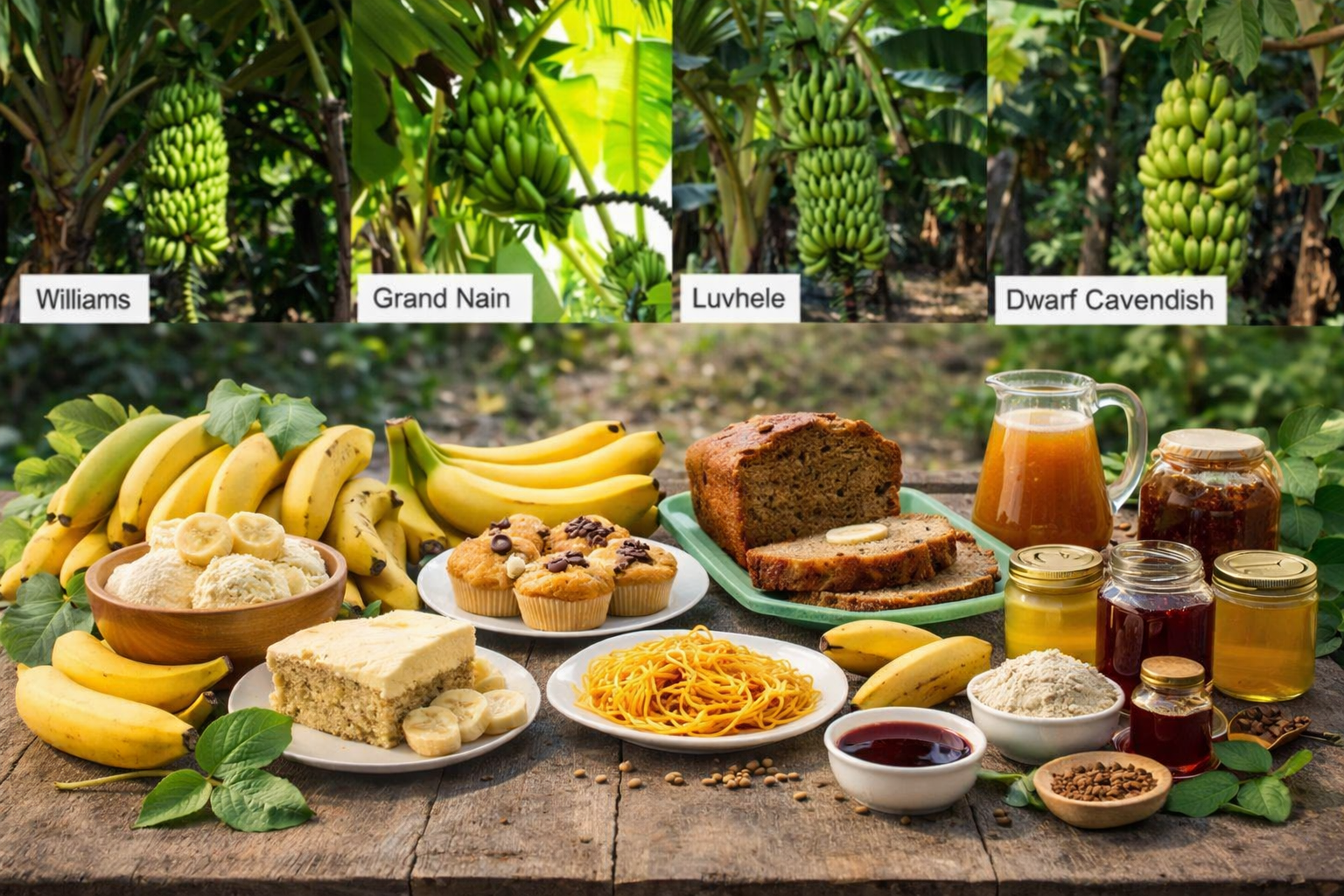
Banana – Value Addition
  • Examples shown: chips, composite bread, banana muffins, banana spaghetti
  • Also shown: yogurt-based products, cake, banana juice, banana jam
  • Varieties depicted: Williams, Grand Nain, Luvhele, Dwarf Cavendish
Probiotic fruit juices
Probiotic Fruit Juices
  • Developed from: carrot, guava, aonla, pineapple, mango, pomegranate, jamun
  • Reported shelf life: 2–3 months at 5°C storage
  • Pineapple & kiwi value addition: dehydrated slices, fruit powder, probiotic beverage, jam, jelly, RTS beverage (improved cloud stability), pulp storage methods
Diversified value added products
Diversified Value Added Products (I)
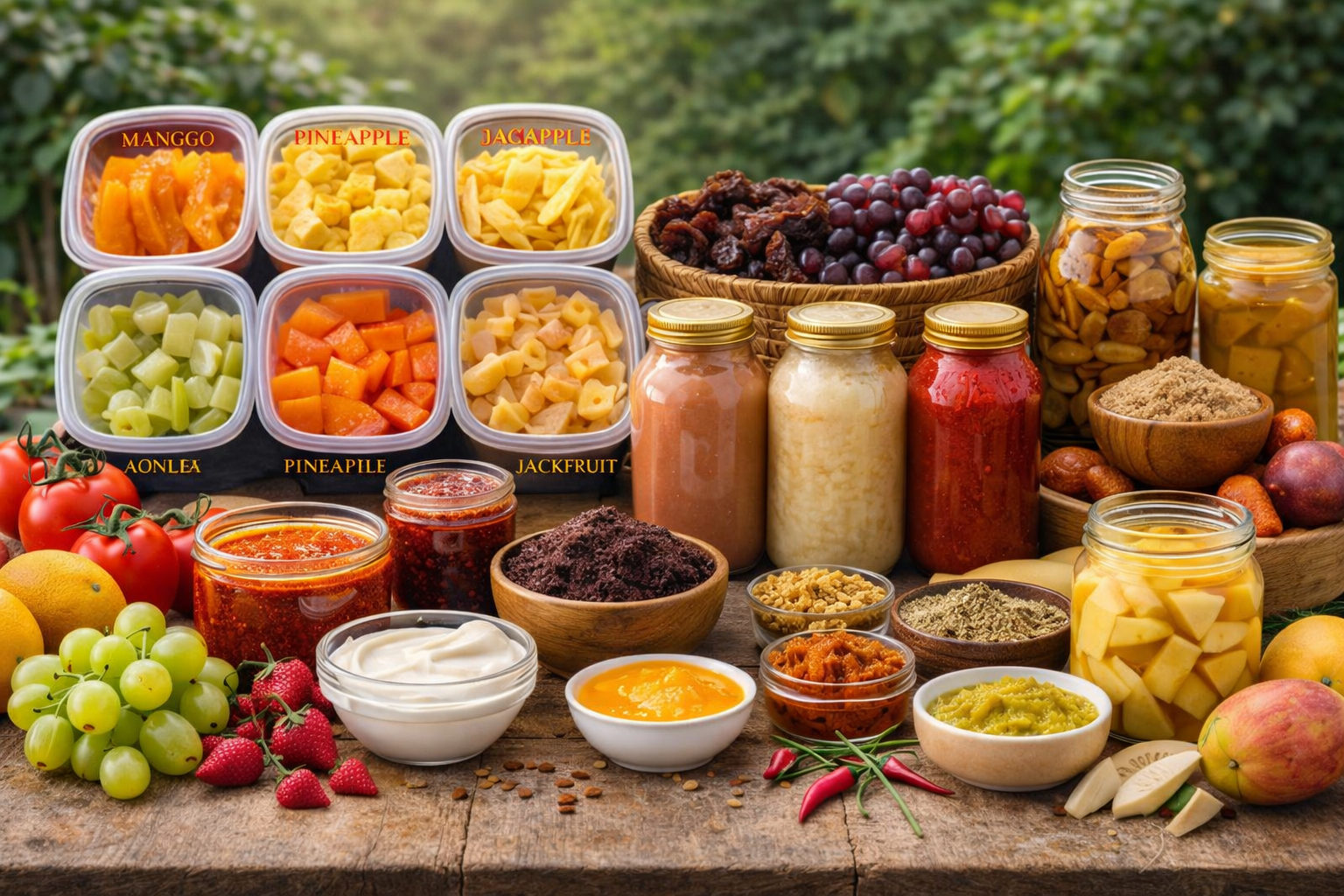
  • Osmotically dehydrated fruits: pineapple, mango, aonla, sapota, papaya
  • Dehydrated fruits: grapes, fig, anardana (from pomegranate)
  • Dehydrated vegetables / culinary pastes: onion, garlic, chilli, ginger
  • Intermediate / semi-processed products: mango pulp
  • Tomato products: concentrate, puree, ketchup
  • Mushroom products: dehydrated mushroom, pickle, chutney
  • Fermented products from vegetables: raw mango slices in brine (pickle production)
Diversified value added products II
Diversified Value Added Products (II)
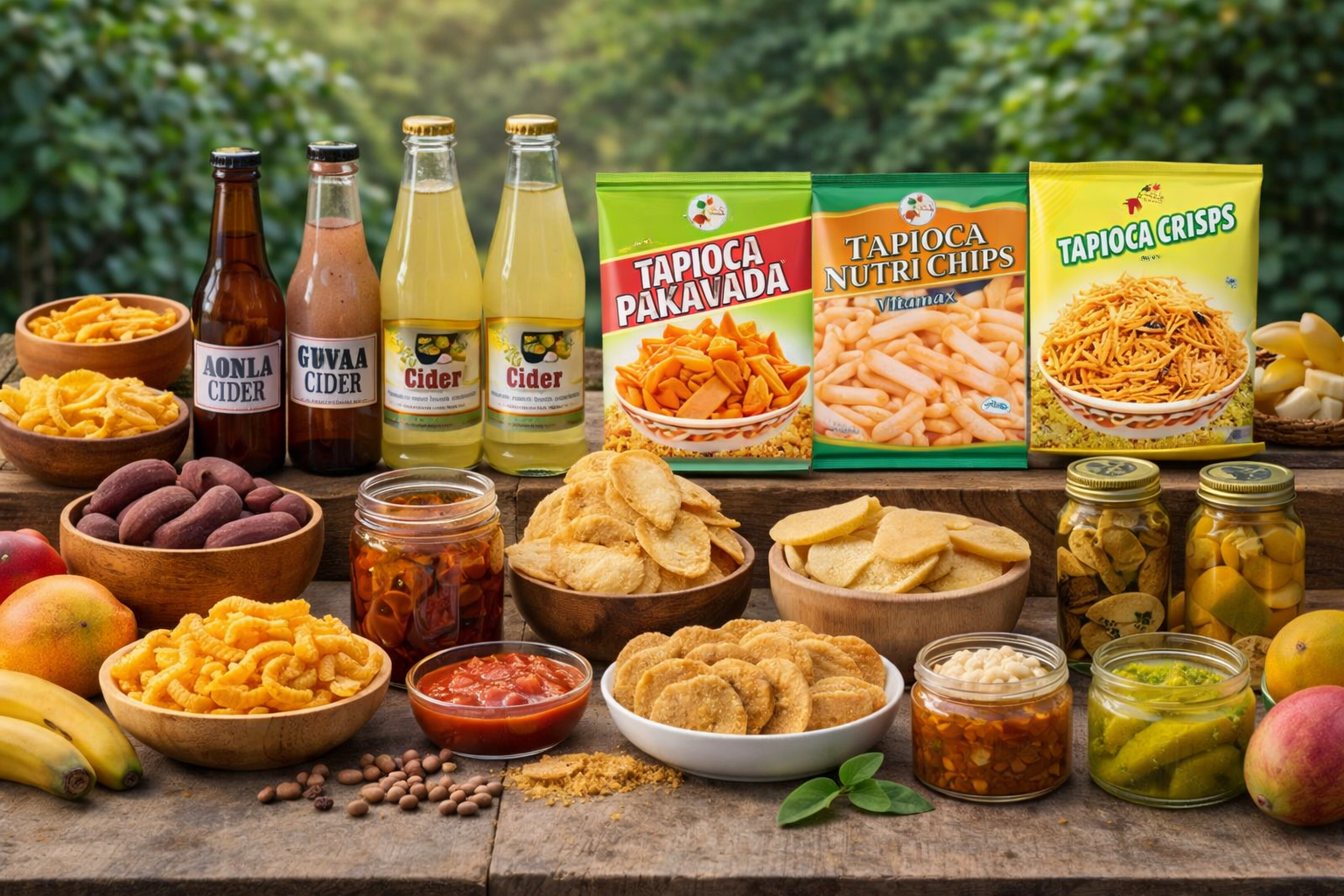
  • Banana chips
  • Watermelon rind candy
  • Cider (anola / guava shown)
  • Banana flower pickle
  • Banana fig
  • Biscuit from banana flour
  • Cassava-based composite flour products
  • Cassava mini-papad
  • Ethanol from cassava
Coconut processing
Coconut – Secondary Processing Potential
Major products
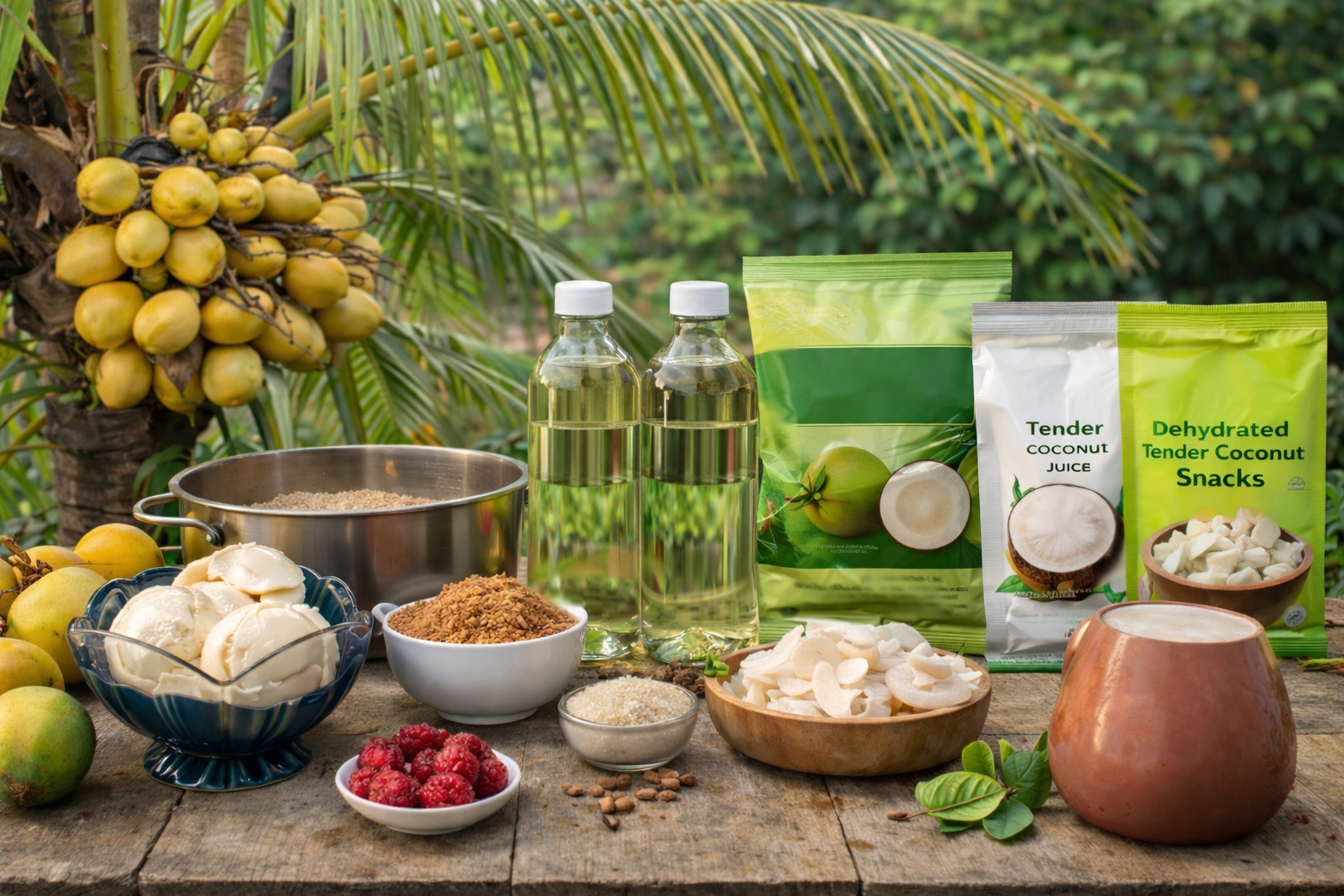
  • Desiccated coconut
  • Virgin coconut oil
  • Packaged coconut milk
  • Coconut water concentrates
  • Coir products
  • Activated carbon
  • Shell powder
  • Packaged tender coconut water
Kalparasa® (Neera) – Value addition
  • Coconut sap (neera) is highlighted as a natural health drink
  • Using CIDA–CRCI technology (chiller box collection), neera with 0% alcohol is obtained (Kalparasa®)
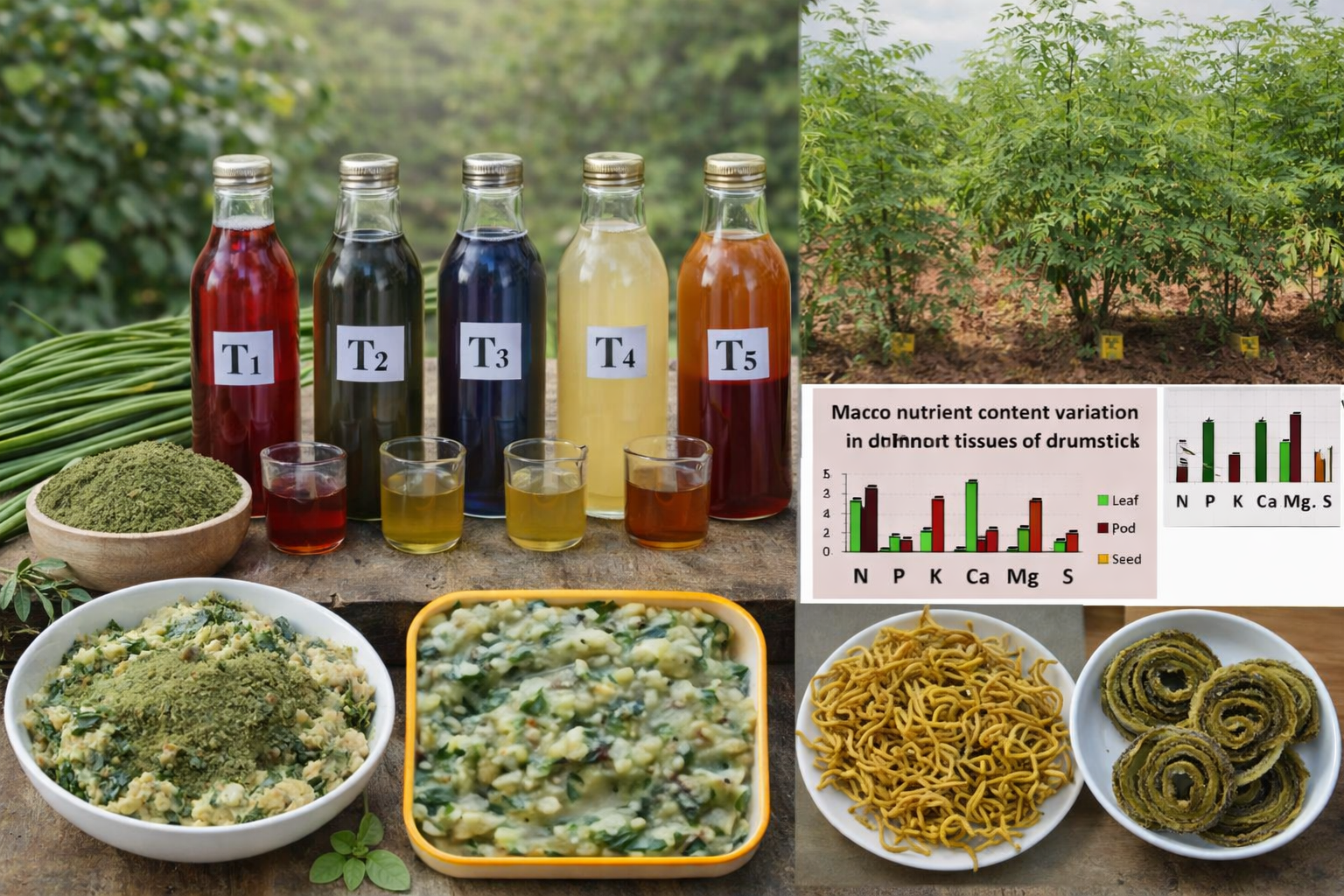
Drumstick value addition
Drumstick – Versatile Crop for Value Addition
  • Drumstick leaf green tea powder blended with tulsi, ginger and lemongrass
  • Highlighted as rich in antioxidants and polyphenols
  • Also rich in protein, fibre, vitamins and minerals
  • Drumstick leaf incorporated products shown
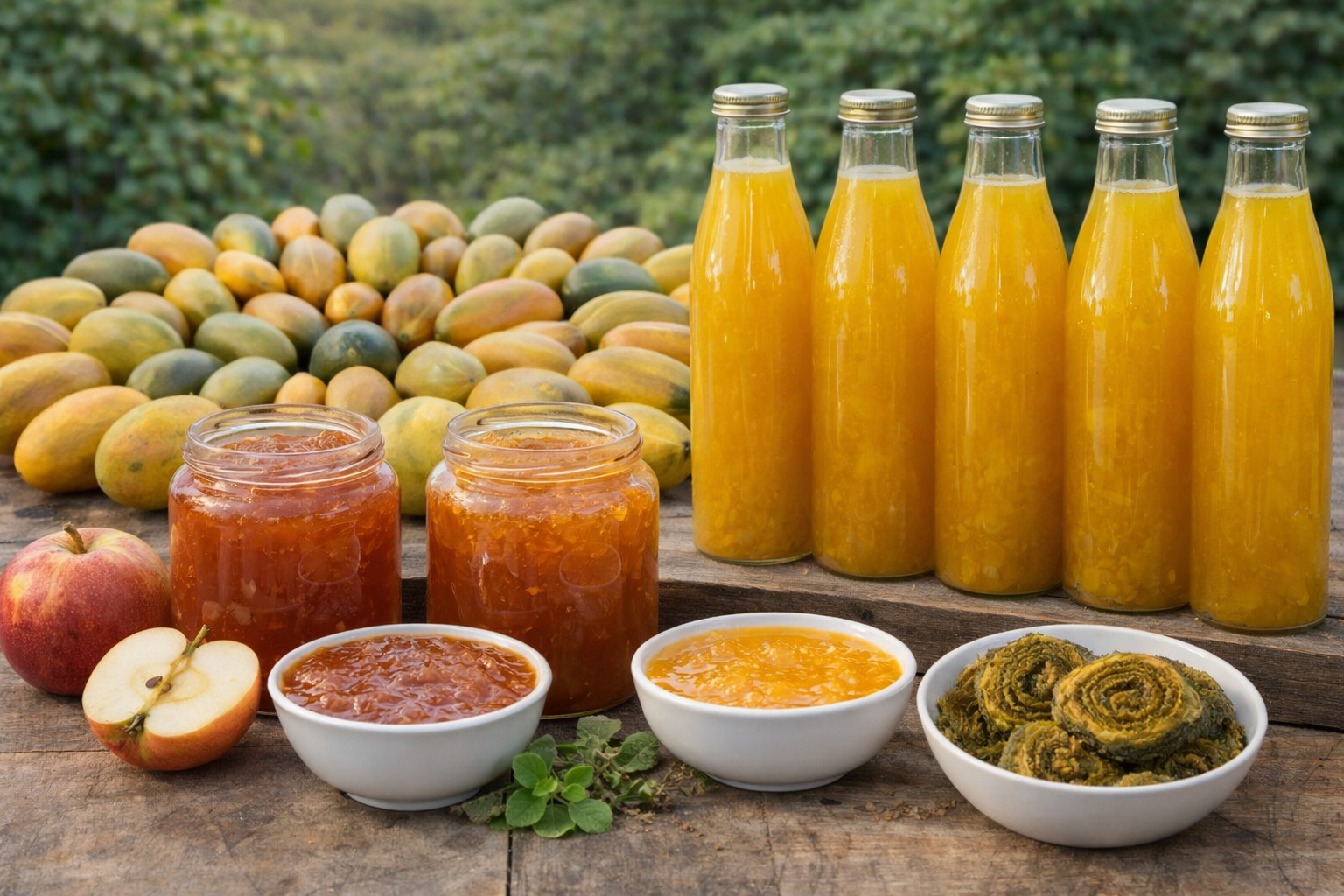
Oriental melon value addition
Oriental Melon – Value Addition
  • Jam: Cucumis melo var. conomon (50%) + Apple (50%) – can be stored 6 months at ambient temperature
  • Squash: Cucumis melo var. conomon + Mango (50% + 50%) – can be stored 6 months at ambient temperature
  • Mangalore melon (Cucumis melo var. acidulous): long shelf life > 12 months at room temperature
  • Development of intra-specific crosses: Mangalore Melon × Muskmelon
Flower waste context
Flower Waste – Context
  • High flower usage in religious devotion creates large floral waste streams
  • Material notes very large quantities deposited at major places of worship
  • Presented as a major waste-management and value-add opportunity
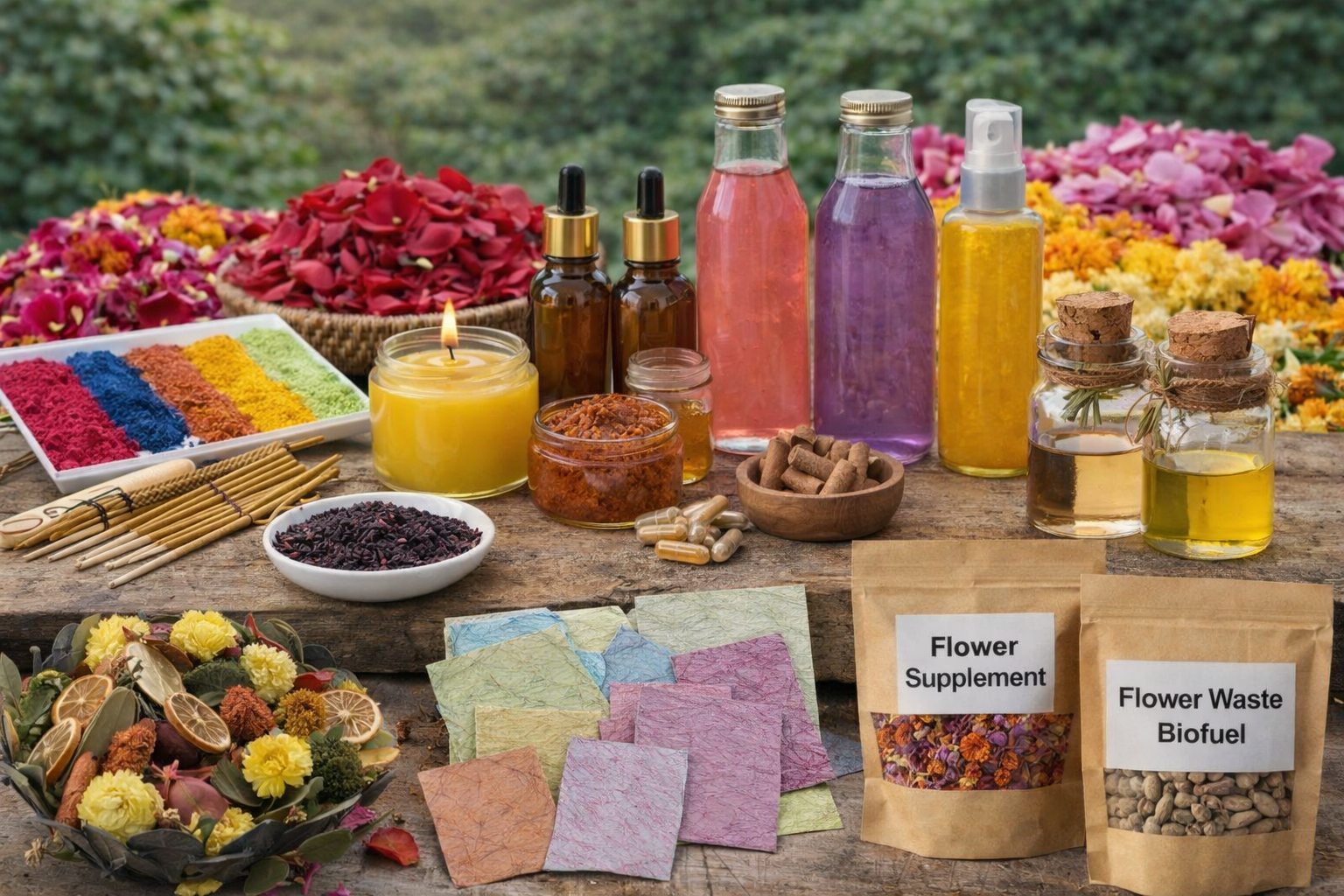
Flower waste utilisation products
Utilisation of Flower Wastes for Value Addition
  • Biofertilizers
  • Incense (Agarbattis)
  • Dyes
  • Generation of bio-fuels
  • Food supplements
  • Potpourris
  • Handmade paper
  • Greeting cards

Constraints

  • Non-availability of proper infrastructure for PHT (processing facility, grading, packaging)
  • Lack of awareness of Indian fruit varieties in foreign countries; quarantine restrictions
  • Irregular supply and non-uniform quality of processed products reduces market acceptance
  • Non-utilisation / improper waste management causes pollution
  • Limited research & development support to industry

Improvements Needed in Post-Harvest Handling

  • Adequate inputs for developing infrastructure for PH handling
  • Establishment of growers association / cooperative under organisations
  • Storage facilities at collection centres
  • Encourage more processing units near production areas (private & public sector)
  • Standardise packaging methods; ensure packaging materials availability locally

Future Thrust Areas

Priorities and focus areas highlighted for future post-harvest development.

Focus Area

Practicing contract farming for horticulture crops to benefit both consumers and farmers (examples shown: Namadhari Fresh – vegetables; Ken Agritech – gherkin).

Focus Area

Determining harvest maturity indices in relation to intended use.

Focus Area

Developing new methods of harvesting, handling, packaging and pre-packaging systems.

Focus Area

Developing low-cost, improved storage techniques to extend shelf life and regulate/delay ripening.

Focus Area

Developing suitable technology for recycling and utilisation of processing waste for economic viability.

Focus Area

Biotechnological approaches in horticulture crops for better storage and processing quality.

Focus Area

Development of novel bio-products from horticulture produce.

Need a Secondary Processing Unit Plan?

Share your crop, expected daily capacity, and location. We will recommend a suitable processing flow, equipment, and implementation approach.